IoT development · Angers, France · nationwide
IoT development: your connected devices, from circuit board to cloud
Web-Duarte designs the whole chain of a connected product: electronics, firmware, network connectivity, over-the-air updates, monitoring platform and app. One point of contact, from proof of concept to mass production.
- From circuit board to app
- Through to industrialization
- You own the code and the data
Services
The whole chain, or just the part you are missing
Web-Duarte can design the product end to end or take on a single building block, working with your team or your manufacturer.
Embedded electronics
Component selection, board design and prototypes, within your cost, battery-life and size constraints.
Firmware
The device’s embedded software (STM32, ESP32): reliable, energy-efficient and built to run for years without intervention.
Connectivity
4G cellular, LoRa, Sigfox or Bluetooth, chosen for range, power consumption and data costs. Example: the protocol designed for an electric fence energizer fits 10 years of data into 500 MB.
Over-the-air updates (FOTA)
Fix a defect or add a feature across the whole fleet without a site visit.
Cloud platform & app
Dashboards, alerts (push, SMS, voice call), geolocation, fleet management and mobile app, on high-availability infrastructure.
Industrialization
Getting ready for mass production with your manufacturer: testing, device activation (for example by QR code) and documentation.
Who it is for
Connected projects of every size
Manufacturers and industrial companies
You want to connect a piece of equipment to control it remotely, monitor its condition or offer your customers a new service.
Hardware start-ups
You have an idea or a prototype and need a partner to take it to a finished product without building a full team.
Design offices and agencies
You cover part of the chain and need subcontracting support on firmware, cloud or the app.
Process
How an IoT project runs
Each stage ends with a concrete deliverable and a decision: you commit to the next stage only once the previous one is approved.
Step 1, Scoping
Your needs and constraints (battery life, network coverage, cost per device, volumes), then a written proposal priced stage by stage.
Step 2, Proof of concept
A first build that validates the risky parts: sensing, data transmission, power consumption.
Step 3, Prototype
Board, firmware and platform brought together in a device tested in the field, under your real operating conditions.
Step 4, Industrialization
Setting up the industrialization process with your manufacturer, through to the pre-series.
Step 5, Deployment & support
Fleet commissioning, monitoring, over-the-air updates and ongoing improvements.
Work
Connected projects in practice
Electronics, firmware, cloud or app: a selection of IoT projects, from device to platform.
 IoT
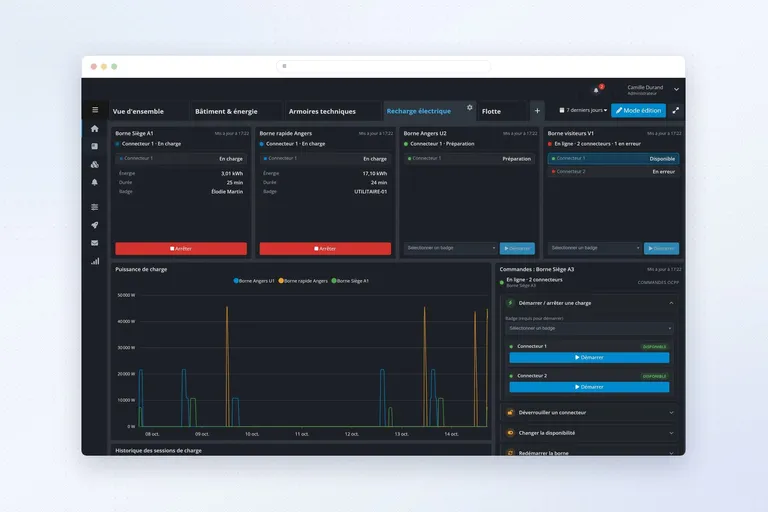
OCPP/OCPI platform: electric vehicle charging
Supervision and control platform for charging stations: OCPP 1.6, 2.0.1 and 2.1 stations of any brand, remote actions, badges, energy use, charging profiles and OCPI 2.2.1 roaming.
 IoT
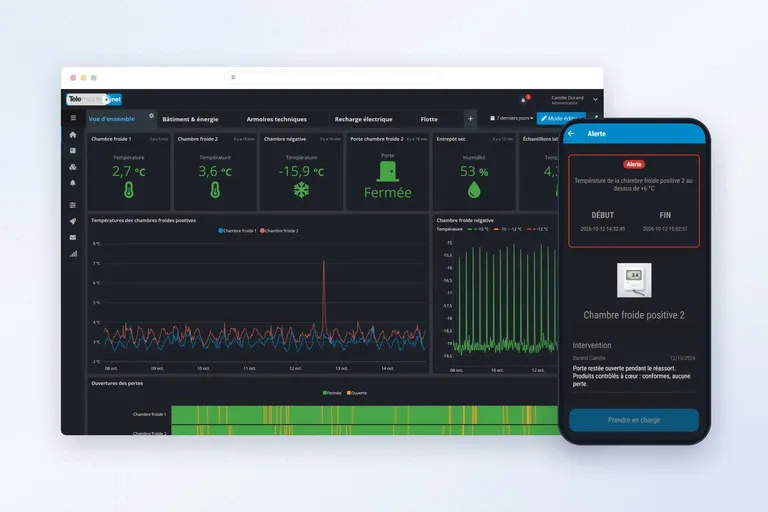
Telemesure.net: IoT remote monitoring platform
Lead developer of Telemesure.net, a platform supervising connected sensors: customizable dashboards, alerts by push, SMS or voice call, geofencing and high availability.
 IoT
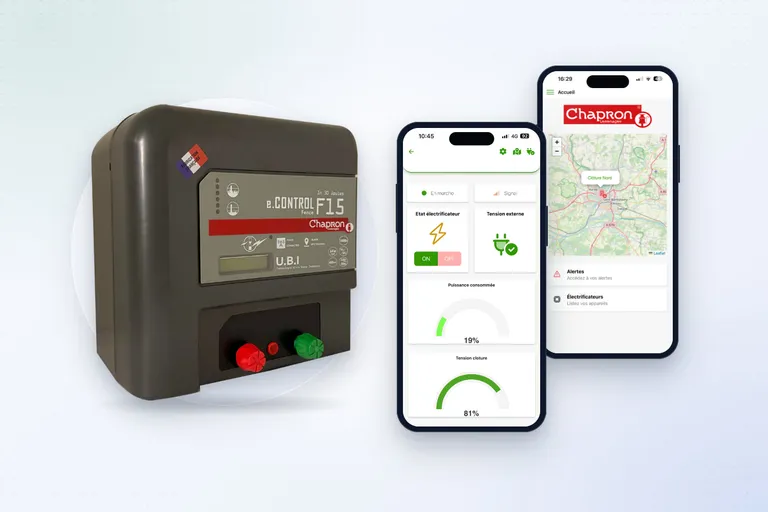
Connected electric fence energizer
Chapron Lemenager
A connected electric fence energizer for Chapron Lemenager: electronics, 3G/4G mobile network, app and cloud platform to monitor and control the fence remotely.
FAQ
Your questions about an IoT project
How much does it cost to develop a connected device?
It depends on what has to be built (electronics, firmware, platform) and on the target volumes. Scoping leads to a proposal priced stage by stage, so you can approve the proof of concept before committing to the rest.
How long does a first prototype take?
It mostly depends on how much electronics has to be designed and which tests are needed. The detailed schedule is part of the proposal, stage by stage, and you see progress at every demo.
Can you take over an existing product or codebase?
Yes. Web-Duarte can audit your firmware or platform, fix defects, extend the product or take over development, including on a single part of the chain.
Do your devices still use 2G or 3G?
French operators are switching off 2G at the end of 2026 and 3G between 2028 and 2029. Web-Duarte helps you choose a replacement module (4G, LTE-M or NB-IoT) and adapts the firmware and platform so your fleet keeps communicating.
Who owns the code and the data?
You do. The source code, documentation and access credentials are handed over to you, so you never depend on the agency to evolve your product.
Do you work outside Angers?
Yes. Web-Duarte is based in Angers, France, and works with companies across France, by video and at your premises when the project calls for it: scoping workshop, on-site testing, commissioning.
Contact
A first conversation about your project
Describe what you need in a few lines. Within one business day you receive a first opinion and, where it makes sense, a proposal. Quotes are free and without obligation.